
Syphilis Infectious Disease Resources
Syphilis poses serious risks to women, pregnant people, and newborns. If left untreated, syphilis can lead to long-term complications such as infertility, neurological and cardiovascular disease, and increased vulnerability to HIV infection. During pregnancy, syphilis increases the risk of miscarriage, stillbirth, and congenital infection. With rates of syphilis on the rise, nurses play a vital role in prevention through early screening, patient education, and timely treatment coordination.
Syphilis Lab Values
Syphilis - Educating Your Patients
- CDCF Emerging Threats: Syphilis: Forgotten Threat, Resurging Disease
- CDCF Emerging Threats: Why Community Health Assessments Matter
Perinatal & Congenital Syphilis: A Provider-to-Provider Conversation
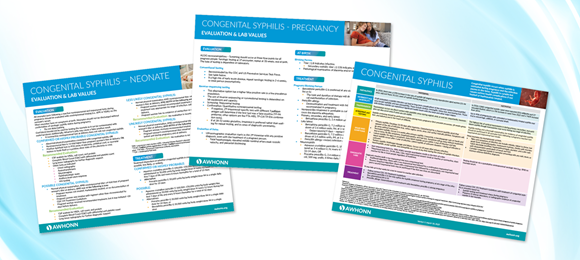
- Congenital Syphilis 101 Infographic (PDF)

- Congenital Syphilis Neonate Infographic (PDF)
- Congenital Syphilis Lab Infographic (PDF)
Screening and Treatment Guidelines
- ACOG Syphilis Screening Algorithm - Flowchart outlining when and how to test pregnant persons for syphilis.
- ACOG Screening for Syphilis in Pregnancy Practice Advisory - Recommendations for syphilis screening and treatment in pregnancy with links to additional information.
- CDC Sexually Transmitted Infection (STI) Treatment Guidelines 2021 - Evidence-based guidance on STI prevention, diagnosis, and treatment, including screening recommendations by disease and population.
- One dose of antibiotic treats early syphilis as well as three doses - NIH-funded study found a single dose of benzathine penicillin G (BPG) was as effective as the traditional three-dose regimen for treating early syphilis. (National Institutes of Health (NIH))
Reporting Guidelines
- Syphilis and congenital syphilis are reportable conditions in every state. Each state has its own reporting guidelines.
Free Continuing Education Opportunities
- Core Concepts - Syphilis During Pregnancy and Congenital Syphilis - Self-Study Lessons - National STD Curriculum - Continuing education opportunity that reviews recent trends in congenital syphilis and covers diagnosis, clinical manifestations, transmission, and treatment of syphilis in pregnant people and neonates. (National STD Curriculum)
- Rising Rates of Syphilis and Congenital Syphilis: How to Screen and Treat - Education designed to enable learners to analyze syphilis and congenital syphilis epidemiological data and identify opportunities to improve screening and treatment across the prevention continuum. (Medscape)
- Syphilis and Congenital Syphilis on the Rise – How to Protect Your Patients - This activity offers guidance on how to implement guideline-based screening recommendations to address the rising burden of syphilis and congenital syphilis. (Medscape)
- Improving Clinical Outcomes: Addressing Gaps in Syphilis and Congenital Syphilis - The goal of this educational activity is to enable learners to implement patient-centered prevention strategies for syphilis and congenital syphilis in clinical practice. (Medscape)
Updated December 2025
This project is supported by the Centers for Disease Control and Prevention (CDC) of the U.S. Department of Health and Human Services (HHS) as part of a financial assistance award totaling $100,360 with 100 percent funded by CDC/HHS. The contents are those of the author(s) and do not necessarily represent the official views of, nor an endorsement by, CDC/HHS, the U.S. Government, or the CDC Foundation.